March 09, 2026
Understanding AI transparency: What research says about labelling deepfakes and synthetic content

Insights from the AlgoSoc team and the AI, Media & Democracy Lab for the AI Office Transparency Expert Group
By Natali Helberger, Marilu Miotto, Hannes Cools
As generative AI becomes increasingly embedded in the creation of text, images, audio, and video, Europe faces a key challenge: how can we help the public recognise and interpret AI-generated content correctly? This question is central to the EU AI Act's transparency requirements. In this context, the AI Office Working Group on Disclosure invited input on how to design notices and labels for AI-generated or AI-assisted content that are meaningful to users without overwhelming them. To support this effort, AlgoSoc, together with the AI, Media & Democracy Lab, compiled and synthesised recent empirical insights from academic research on AI transparency, media effects, and user behaviour. This article presents the key findings of that work in an accessible way. It is intended for policymakers, platform designers, journalists, and interested citizens who want to better understand what research tells us about the promises and limits of labelling AI-generated content. A more technical background document, including references and methodological details, is provided in the appendix.
Why do we label AI-generated content?
A first and often overlooked question is why we want to label AI-generated or AI-assisted content in the first place. Research suggests that different objectives call for different design choices.
Labelling for transparency
If the primary goal of labelling is transparency, simply informing people that AI played a role in producing a piece of content, then existing approaches used by platforms in other contexts may work. Research on labels for misinformation and political advertising shows that relatively simple disclosures can be adequate, provided that users actually notice them.
However, AI-generated content introduces a new layer of complexity. In particular, there are many degrees of AI involvement. A human-written text lightly edited with AI tools is very different from a text entirely generated by a large language model after a short prompt. Similarly, a photograph retouched with AI differs significantly from an image generated entirely from scratch.
Yet, a generic label such as “AI-generated” tends to flatten these differences. Research indicates that such labels often lead users to assume that the content was entirely authored by AI, even when this is not the case. In that sense, current labelling practices may fail to serve the transparency objective and may even mislead users.
Labelling to support better judgements
What if the objective of labelling is not only transparency, but also helping citizens make better-informed choices about the content they encounter?
Here, research suggests that labels alone are unlikely to be sufficient. While studies show that labels do not significantly reduce enjoyment of light or entertaining AI-generated content (such as humorous videos), the effects are different for more consequential information, such as news or political content. In those contexts, labelling content as AI-generated tends to lower perceived quality and credibility, regardless of the information's actual quality.
This points to the need for richer forms of disclosure. Instead of a single, binary label, users may benefit from additional contextual information, such as:
- how the AI system was used (e.g., generation versus editing)
- what data or sources informed the output
- and what editorial or institutional standards apply.
Such information could help users interpret AI-generated content more accurately, rather than relying on potentially misleading shortcuts.
Labelling to empower users
A third possible objective of labelling is user empowerment. However, if the aim is to give people more agency over their information environment, transparency alone is not enough.
Empowerment implies some degree of control. Research suggests users may benefit from tools that enable them to act on information from labels, for example, by filtering, prioritising, or opting out of AI-generated. Without such options, labels risk becoming passive signals that place the full burden of interpretation on users.
How should we label AI-generated content?
Once the scope of labelling is defined, a second question arises: how should labels for AI-generated or AI-assisted content be designed and implemented? Policy and research discussions point to two broad, non-exclusive approaches to label design. One is harm-oriented, focusing on risks such as deception or the potential to mislead. The other is transparency-oriented, centring on disclosure: whether AI was used, how it was used, and for what purposes.
Both approaches involve trade-offs. Labels must remain simple and easy to understand to avoid overwhelming users. At the same time, simplicity alone does not guarantee that labels will achieve their intended effects. Minimal indicators, such as icons or short warnings, may attract attention but are often insufficient to meet transparency requirements or support meaningful interpretation. For this reason, research increasingly points to the value of more informative forms of disclosure. Instead of relying on binary labels, users may benefit from additional contextual information or “quality” signals that clarify how AI was involved in the production process and what safeguards were in place. Metadata, for example, could indicate whether AI was used for generation or editing, whether human oversight was involved, and which editorial or institutional standards apply.
Such information can help users make more informed assessments of the trustworthiness of AI-generated or AI-assisted content.
Here, metadata plays a particularly important role. Embedding information about AI use directly into content can help ensure that labels persist across platforms and distribution channels. This, however, depends not only on the systems used to generate and host content, but also on intermediary tools, such as image and video editing software, which may alter or remove metadata. Ensuring the persistence of such information across the content lifecycle is therefore a key practical challenge for effective labelling.
Conclusion
Finally, research makes clear that labelling AI-generated content is not a simple technical fix. Much depends on the underlying objective: transparency, better judgment, or user empowerment.
However, current approaches fall short even of the most basic transparency goal. A generic “AI-generated” label is often not informative enough and can lead to misunderstandings about how content was produced. If labels are to meaningfully support citizens, they need to reflect degrees of AI involvement, provide relevant context, and, where empowerment is the goal, be accompanied by options for user control.
These insights should inform ongoing discussions about implementing the AI Act’s transparency requirements and the design choices made by platforms and regulators alike.
The technical background document and sources can be found here:

Authors

Media / Sector Leader
Prof. dr. Natali Helberger
Distuingished university professor of law and digital technology with a special emphasis on artificial intelligence / University of Amsterdam
University Profile
See also
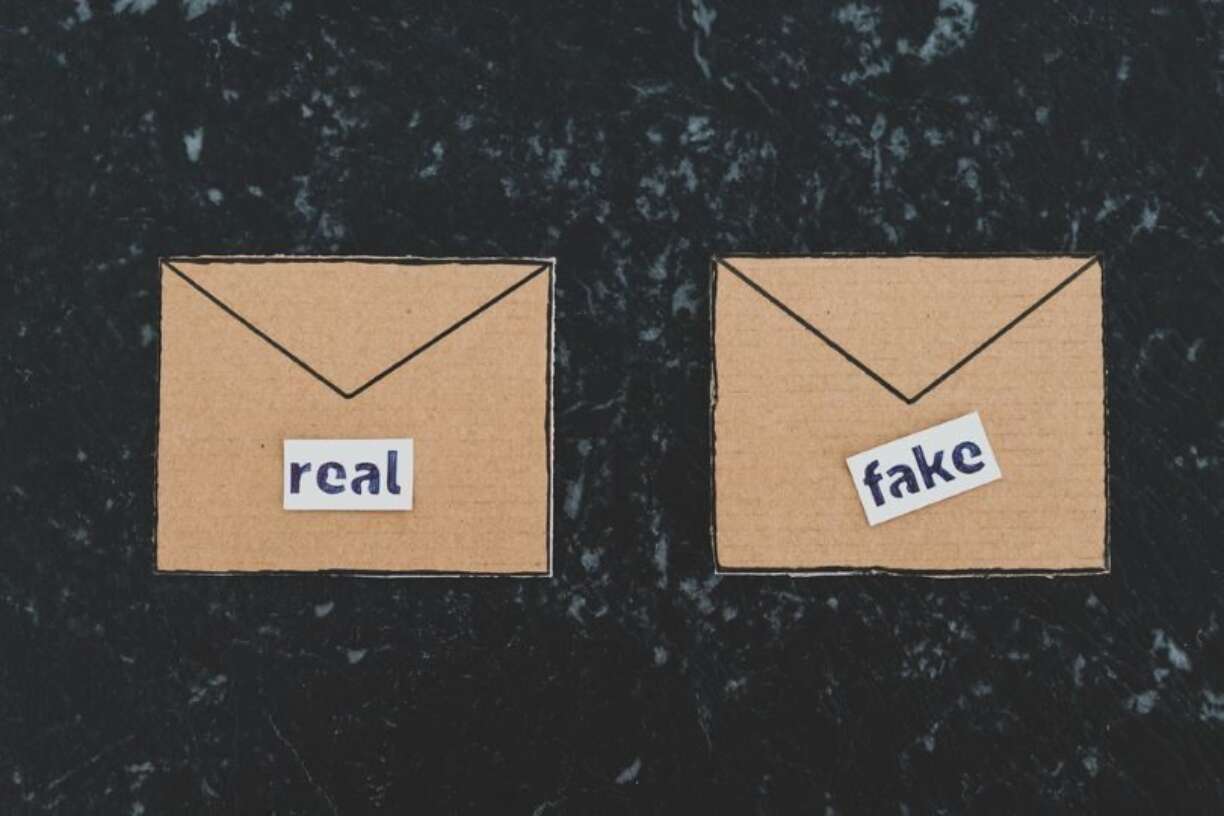
Not Just Fake News: Deepfakes and the Crisis of Trust
By Marilù Miotto • March 02, 2026

Clouded judgments: Problematizing cloud infrastructures for news media companies
By Agustin Ferrari Braun • Corinne Cath • January 29, 2026


Je medisch dossier inladen in nieuwe functie ChatGPT? Denk 10.000 keer na
By Natali Helberger • January 19, 2026

Combatting financial crime with AI at the crossroads of the revised EU AML/CFT regime and the AI Act
By Magdalena Brewczyńska • January 16, 2026
More results /
 The 2026 Stevin Prize: Claes de Vreese and his academic journey
By Claes de Vreese • October 07, 2026
By Ernesto de León • Claes de Vreese • September 17, 2026
By Natali Helberger • June 16, 2026

By Iris van Domselaar • Isabella Banks • October 01, 2026
By Iris van Domselaar • Isabella Banks • September 23, 2026
 Fairy Tales That Make Life Harder: AI, and the social and ethical costs of believing in it
By Martijn Logtenberg • September 28, 2026
By Martijn Logtenberg • March 13, 2026
By Martijn Logtenberg • November 20, 2025
 Strengthening the media’s bargaining power over Generative AI
By Natali Helberger • October 23, 2026
By Natali Helberger • September 21, 2026
By Jin Wan • Theo Araujo • Natali Helberger • Claes de Vreese • September 17, 2026
