Results /
Results /

By Claes de Vreese • October 07, 2026
The 2026 Stevin Prize: Claes de Vreese and his academic journey
Our scientific co-director Claes de Vreese received the Stevin Prize, the highest recognition in...


By Iris van Domselaar • Isabella Banks • October 01, 2026
Onderzoekers waarschuwen: AI-gebruik kan ‘rechterlijke blik’ vertroebelen
Artikel afkomstig van Mr. Kunstmatige intelligentie kan rechters niet alleen beïnvloeden bij het...

By Martijn Logtenberg • September 28, 2026
Fairy Tales That Make Life Harder: AI, and the social and ethical costs of believing in it
The following is a keynote given by Martijn Logtenberg on 28 September during a joint women's...

By Iris van Domselaar • Isabella Banks • September 23, 2026
Loss of judicial sight? The impact of assistive AI technologies on judicial perception — beyond the question of discretion
Through three hypothetical case studies, this article explores how the use of assistive AI...

By Natali Helberger • September 21, 2026
The Label Paradox: Can AI transparency create more distrust?
To explore questions around AI transparency labels and the EU AI Act, the AI, Media and Democracy...

By Jin Wan • Theo Araujo • Natali Helberger • Claes de Vreese • September 17, 2026
How does political efficacy condition clicks on politics? Understanding information-selection behavior in algorithmic feeds over time
This study uses political efficacy to explain individual differences in selecting political...

By Ernesto de León • Claes de Vreese • September 17, 2026
AI insiders warn it could end humanity. Does the public agree?
Artificial intelligence is becoming an increasingly visible part of everyday life, public debate...

By João Pedro Quintais • September 03, 2026
A Jug of Settled-Down Juice: AI Guidelines on Transparency Obligations
João Pedro Quintais discussed with Alba Ribera Martínez (of The Binary Agora) about the European...

By João Pedro Quintais • September 02, 2026
Hey EU, your new rules for ChatGPT don’t cover chat
by Eliza Gkritsi and Pieter Haeck in POLITICO Europe The world’s most popular chatbot is now...

By Corinne Cath • Agustin Ferrari Braun • Seda Gürses • July 13, 2026
Rethinking European media infrastructures
European media infrastructure is increasingly dependent on a handful of American Big Tech...
By Tynke Schepers • July 09, 2026
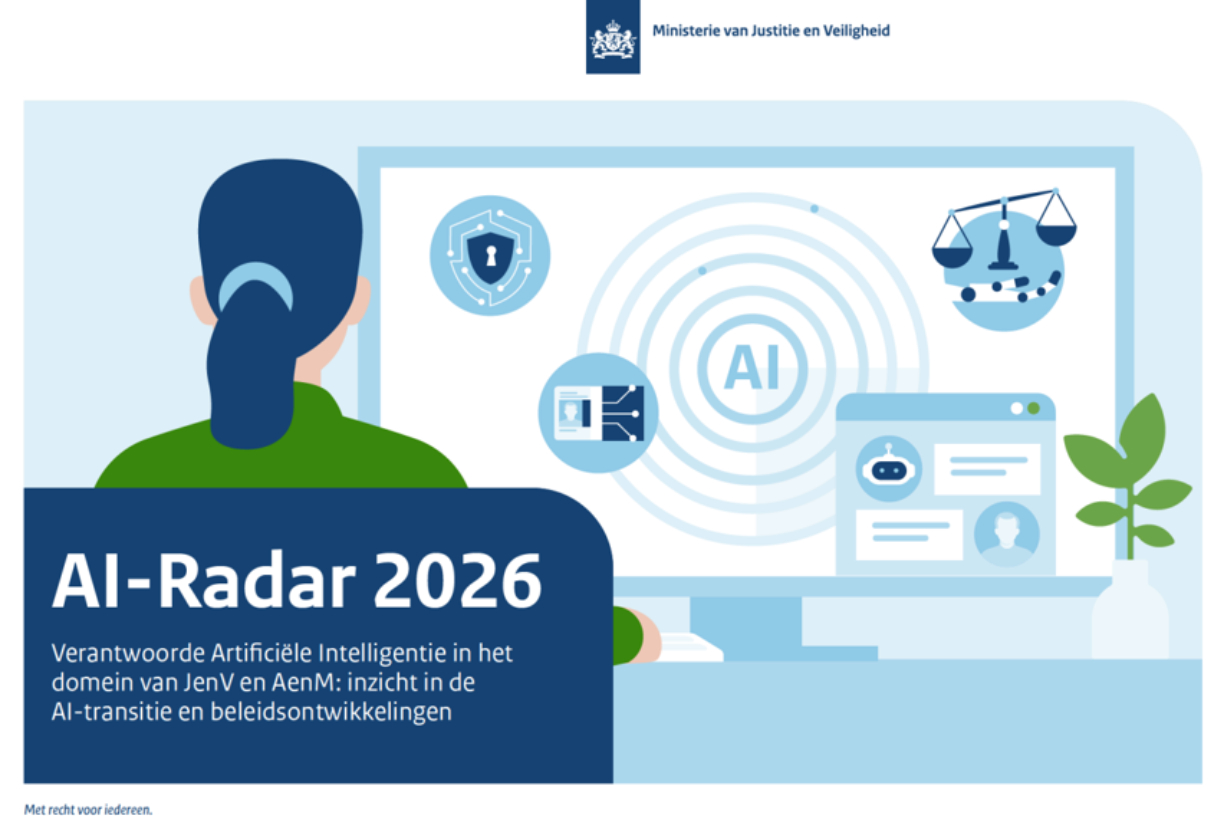
Reflections on the AI-Radar 2026
On the 29th of June, 2026, AlgoSoc hosted an interactive online roundtable on the recently...

By João Pedro Quintais • June 25, 2026
Learning Call: GenAI and the DSA’s Systemic Risk Framework
This Learning Call, part of an ongoing series on current issues surrounding the Digital Services...
By Natali Helberger • June 16, 2026
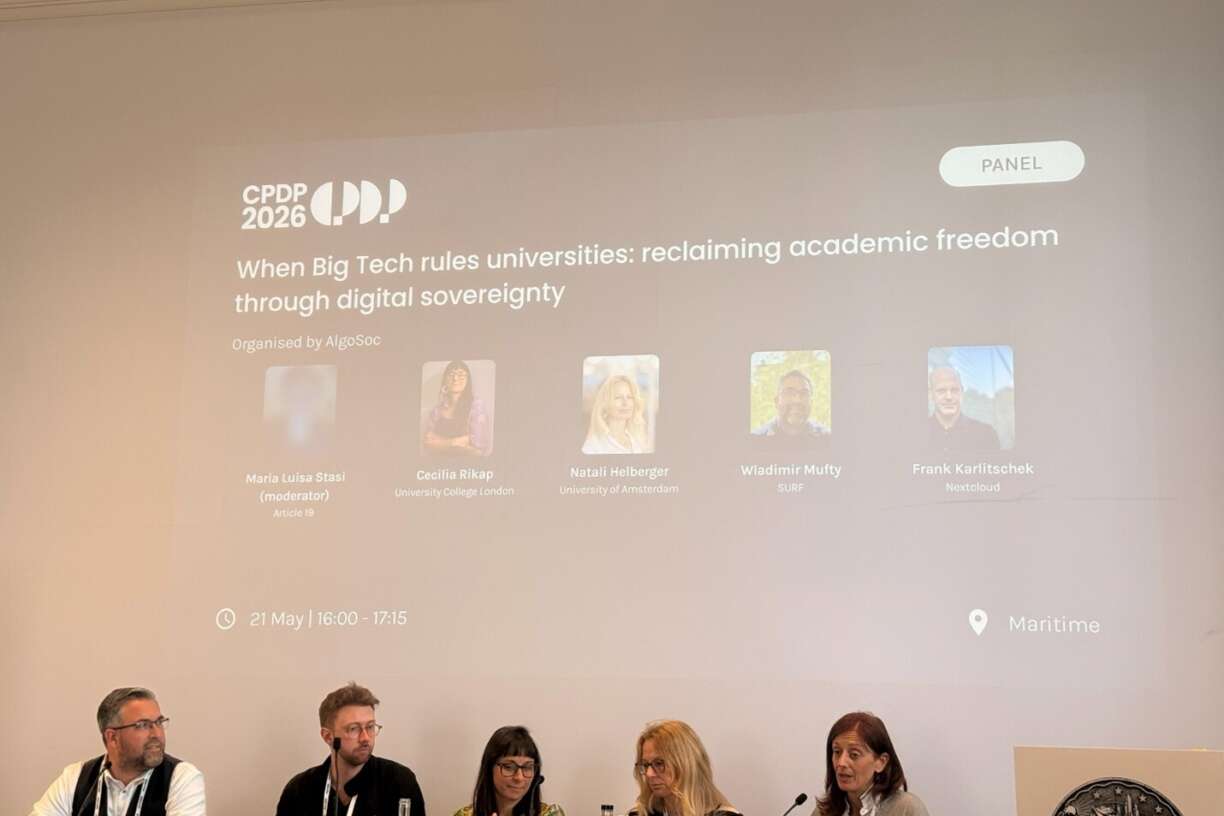
When Big Tech rules universities: Reclaiming academic freedom through digital sovereignty
Digital infrastructures are essential resources enabling research and education. Now, however,...

By Natali Helberger • June 15, 2026
Volgens Duitse rechter is Google verantwoordelijk voor inhoud AI-tekst in zoekresultaten
Google is verantwoordelijk voor een aantal onjuiste uitspraken die in een AI-overzicht van...

By Charis Papaevangelou • Sabrina Kutscher • Natali Helberger • José van Dijck • Thomas Poell • June 01, 2026
Shared responsibility, unequal power: Mapping the limitations of multi-stakeholderism in the EU’s digital governance
With the adoption of the Digital Services Act, Digital Markets Act, Artificial Intelligence Act...

By Corinne Cath • May 29, 2026
Cloud drift: how hyperscaler cloud computing shapes internet governance
When the Foundation for Internet Domain Registration in the Netherlands (SIDN) announced plans to...

By Agustin Ferrari Braun • May 08, 2026
“Reliable and cheap”?: Examining the adoption of the cloud by European news media companies
This article by Agustin Ferrari Braun (University of Amsterdam) argues that the widespread...

By José van Dijck • April 30, 2026
Hou DigiD uit Amerikaanse handen nu het nog kan
Tot 6 mei kan Nederland nog zonder veel extra kosten ervoor zorgen dat DigiD en de Berichtenbox...

By Magdalena Brewczyńska • April 16, 2026
Regulatory entrepreneurship’s threat to digital sovereignty: the case of Worldcoin in Kenya
This article analyses the case of Worldcoin’s entry into Kenya and the controversies that ensued.

By Esther Keymolen • Donovan van der Haak • April 01, 2026
Artificial Intentions: Winner’s Inherently Political Artifacts, AI and Government
This paper applies Langdon Winner’s theory of technological politics to AI in government, arguing...

By Ernesto de León • Fabio Votta • Daniel Oberski • Theo Araujo • Claes de Vreese • March 30, 2026
How Much Data Should I Request? Balancing Richness and Compliance in Digital Trace Data Donations
Asking people to donate more of their social media data can lead to richer results, but may also...

By Martijn Logtenberg • March 13, 2026
The expectation game
This blog is produced as a part of the Reshaping Work Fellowship Programme. The opinions and...

By Natali Helberger • Marilù Miotto • March 09, 2026
Understanding AI transparency
Insights from the AlgoSoc team and the AI, Media & Democracy Lab for the AI Office...

By Marilù Miotto • March 02, 2026
Not Just Fake News: Deepfakes and the Crisis of Trust
In recent years, deepfakes have become a common subject in political discussions, often seen as...

By Isabella Banks • February 12, 2026
Judges-in-the-loop? Judicial involvement in human oversight of high-risk decision support systems under the EU AI Ac
This article explores the implications of making judges-in-the-loop responsible for human...

By Agustin Ferrari Braun • Corinne Cath • January 29, 2026
Clouded judgments: Problematizing cloud infrastructures for news media companies
This article by Agustin Ferrari Braun (University of Amsterdam) and Dr. Corinne Cath (University...

By Natali Helberger • January 19, 2026
Je medisch dossier inladen in nieuwe functie ChatGPT? Denk 10.000 keer na
De AI-chatbot ChatGPT krijgt een speciale gezondheidsfunctie. Gebruikers kunnen dan onder meer...

By Magdalena Brewczyńska • January 16, 2026
Combatting financial crime with AI at the crossroads of the revised EU AML/CFT regime and the AI Act
This article published by Dr. Magdalena Brewczyńska (Tilburg University) is providing an in-depth...

By Fabio Votta • December 28, 2025
Large language models
This entry examines the role of LLMs in political communication research, tracing their...

By Ernesto de León • December 28, 2025
Hyperpartisan news
This chapter explores hyperpartisan news, a contentious aspect of the contemporary media...

By Marilù Miotto • Jin Wan • Fabio Votta • December 28, 2025
Filter bubbles
This entry explores the concept of filter bubbles, a digital phenomenon where algorithmic content...

By Dr. Enrico Liscio • December 20, 2025
Signs of Struggle: Spotting Cognitive Distortions across Language and Register
This study tests whether models trained to detect cognitive distortions in text can generalize to...

By Magdalena Brewczyńska • Shirley Kempeneer • December 17, 2025
Regulating digitalised financial spaces: The way towards just distribution of burdens and benefits
The rapid advancement of digitalisation has transformed the financial sector and the way...

By Marilù Miotto • Anna Priante • Ting Li • December 10, 2025
Frame Similarity and Online Communities: The Case of Deepfakes on Reddit
In online communities, the exchange of information and knowledge is mediated by the generation,...

By Ernesto de León • Fabio Votta • November 30, 2025
Classifying TikToks Locally: Political Content Detection with Phi-4 on Android
Can AI directly analyze political content displayed on phones without sending sensitive screen...

By Roel Dobbe • November 24, 2025
De AI-industrie buit mens en aarde uit
Veiligheidsonderzoeker Roel Dobbe maakt zich over veel dingen zorgen bij AI, maar niet dat AI...

By Martijn Logtenberg • November 20, 2025
Labour politics and why AI hasn't 'fixed' healthcare
There’s a popular belief that AI will fix everything: that it’s unstoppable, fair, and won’t...

By Roel Dobbe • November 12, 2025
Help onze democratie stutten tegen de stormvloed die techoligarchen gecreëerd hebben
Waarom blijft digitale zaken in politiek Den Haag zo onbelangrijk, nu de digitale wereld in brand...

By Fabio Votta • November 05, 2025
What data reveals about Meta and Google’s political ad ban in the EU
When Meta and Google announced they would ban political advertising in the European Union ahead...

By Dr. Enrico Liscio • November 04, 2025
Will Annotators Disagree? Identifying Subjectivity in Value-Laden Arguments
This study argues that reducing multiple annotations to one “ground truth” can obscure meaningful...

By Ernesto de León • Fabio Votta • Theo Araujo • Claes de Vreese • October 28, 2025
1 in 10 Dutch citizens are likely to ask AI for election advice. This is why they shouldn't
Would you trust an AI to tell you who to vote for?

By Natali Helberger • José van Dijck • Claes de Vreese • October 27, 2025
Europe wrote the AI rulebook. Can it deliver on its ambitions?
Europe has crafted a world-leading regulatory framework for AI—but can it now fulfil its...

By Dr. Enrico Liscio • October 25, 2025
Taking a SEAT: Predicting Value Interpretations from Sentiment, Emotion, Argument, and Topic Annotations
This study tests whether language models can better predict how individuals interpret human...

By Jacqueline Kernahan • Richard Bartels • Mark de Reuver • Daniel Oberski • Roel Dobbe • October 20, 2025
Burying the Lead: Adjusting Goals to Manage Functional Limitations of AI Tools in Healthcare
Artificial intelligence based tools are being developed for decision support in healthcare,...

By Ernesto de León • Fabio Votta • Theo Araujo • Claes de Vreese • October 14, 2025
Can tailored recruitment messaging increase digital trace data donation compliance?
Digital trace data donations offer valuable insights for social science research, but securing...

By Dr. Enrico Liscio • October 07, 2025
News is More than a Collection of Facts: Moral Frame Preserving News Summarization
This paper investigates whether AI-generated news summaries retain journalists’ moral...

By Isabella Banks • Jacqueline Kernahan • October 02, 2025
Designing a ‘fair’ human-in-the-loop
What does it really mean for humans-in-the-loop (HITLs) to make AI systems more “fair”? At the...

By Jolien van de Sande • October 01, 2025
Wie bepaalt wat goede zorg is?
Over politieke inmenging en financiële aspecten bij de ontwikkeling van kwaliteitsstandaarden en...

By Charis Papaevangelou • Fabio Votta • September 22, 2025
Trading nuance for scale? Platform observability and content governance under the DSA
Keywords: Digital Services Act, content moderation, platform governance, automated moderation, EU...

By Linnet Taylor • Joan Lopez Solano • September 02, 2025
Governing AI (also) means governing markets, institutions and people
This short paper is a response to commentaries on the Global Data Justice project's paper,...

By José van Dijck • August 25, 2025
Bigger And Faster Or Better And Greener? The EU Needs To Define Its Priorities For AI
The European Commission's AI Continent Action Plan (AI-CAP) articulates Europe’s ambition to take...

By Natali Helberger • Claes de Vreese • July 31, 2025
Governments want to ease AI regulation for innovation, but do citizens agree?
Governments currently push for lighter AI regulation to promote innovation, but a recent survey...

By Ernesto de León • July 18, 2025
How do media contribute to the dissemination of conspiracy beliefs? A field study combining panel and web tracking at the outbreak of the COVID-19 pandemic
As COVID-19 escalated into a global health crisis, pandemic-related conspiracy theories emerged...

July 09, 2025
The future of public values in the algorithmic society
As algorithms and artificial intelligence increasingly shape our societies, the AlgoSoc...

By Agustin Ferrari Braun • July 04, 2025
Imagining the Future of European Digital Infrastructures
We find ourselves at a crossroads: current digital infrastructures are faltering, increasingly...

By Sabrina Kutscher • July 02, 2025
The EU AI Act: Law of Unintended Consequences?
Keywords: regulation of technology, regulatory space, AI Act, EU technology regulation
By Koen Frenken • June 30, 2025
The new NATO spending target will hamper Europe’s innovation policy
NATO member states have committed to raising defence and security-related spending from 2 to 5...

By Marilù Miotto • Anna Priante • Ting Li • June 17, 2025
Seeing Isn’t Believing: How Deepfake Salience Disrupts News Credibility and Sharing on Social Media
The rise of accessible generative AI streamlines deepfakes generation and diffusion, further...

By Maurits Kaptein • June 06, 2025
AI won’t save us from the hard choices in healthcare
Last week, the recently resigned Dutch Health Minister Fleur Agema announced an €800 million...
By Moniek Buijzen • June 02, 2025
AICON: Showcasing a ‘radicareful’ alternative system
In the warmth of late summer two years ago, on a city café’s terrace, we sowed the first seed of...
By Albert Meijer • May 26, 2025
Generatieve AI en duurzaamheid
Generatieve AI is de laatste tijd sterk in opkomst en zal naar verwachting ook productieprocessen...

By Ernesto de León • May 18, 2025
Tracing Knowledge Gaps: Investigating the Influence of Education on News Exposure and Knowledge Using Digital Trace Data
This study combines surveys and digital trace data from Switzerland and Germany to examine how...

By Ernesto de León • May 15, 2025
Misperceptions of Public Opinion During Crises: Evidence from the COVID-19 Pandemic
How we perceive the public opinion climate can have important consequences on our own opinions...

By Agustin Ferrari Braun • April 16, 2025
Independent media has an infrastructural problem
Independent media outlets are increasingly dependent on Big Tech infrastructure—such as cloud...
By Agustin Ferrari Braun • Charis Papaevangelou • April 29, 2025
Information Ecosystems and Troubled Democracy: Dutch Policy Reflections
The Observatory on Information and Democracy recently published its report on Information...

By Natali Helberger • Claes de Vreese • April 09, 2025
Calling for a transformation to digital autonomy
Support our call for a transformation to digital autonomy and sign our open letter

By Sabrina Kutscher • Johan Wolswinkel • March 27, 2025
The Rule of Tech? Submitting Legislation to Digital Constraints
While ‘by design’ approaches are increasingly advocated to ensure technology being compliant with...
By Claes de Vreese • March 26, 2025
Will Europe Sacrifice the Digital Services Act in Negotiations with Trump?
Imagine this: Providers of very large online platforms (VLOPs) walking away from the commitments...

By Natali Helberger • March 06, 2025
The rise of technology courts
When we talk about the power of Big Tech in terms of structural dependency or strategic autonomy,...

By Charis Papaevangelou • February 28, 2025
State, platform capitalism and infrastructural power: Microsoft's data centres in Greece 2.0
In recent years, data centres have become critical infrastructures, supporting cloud computing,...

By José van Dijck • February 26, 2025
Misinformatie in de gezondheidszorg
In de nieuwste aflevering van De Stem van de Dokter duiken Federatievoorzitter Piet-Hein Buiting...

By Albert Meijer • José van Dijck • February 24, 2025
Universiteit, maak je los van Big Tech
Laat de wetenschap een voortrekker zijn met digitale soevereiniteit, schrijven AlgoSoc onderzoekers...

By Fabio Votta • February 24, 2025
AI transparency in political campaigns: The CampAIgn Tracker for the 2025 German Election
For political campaigns, Artificial intelligence (AI) has introduced both innovative strategies...

By Natali Helberger • February 13, 2025
De concentratie van macht over AI is ondemocratisch
Wat gebeurt er als een van de politiek machtigste mannen ter wereld de controle krijgt over een...

By Seda Gürses • Roel Dobbe • February 13, 2025
(Hoe) blijven universiteiten baas over hun bestanden in de cloud?
Universiteiten zijn te afhankelijk geworden van grote Amerikaanse ict-bedrijven, vinden veel...

By José van Dijck • February 12, 2025
Grote techbedrijven manipuleren onze meningen
Amerikaanse socialmediaplatforms schaften moderatie en factchecken af, onder het mom van vrijheid...

By Ernesto de León • February 11, 2025
Where did you come from, where did you go? News trajectories in Germany and Switzerland
This study uses survey and web-tracking data to map how people in Germany and German-speaking...

By Moniek Buijzen • February 11, 2025
Let's take back control of social media
A handful of Big Tech multimillionaires are influencing our information, our politics and our...

By Dr. Enrico Liscio • February 10, 2025
Value preferences estimation and disambiguation in hybrid participatory systems
Understanding citizens’ values is essential for creating more citizen-centric policies. In...

By João Pedro Quintais • January 31, 2025
Generative AI, copyright and the AI Act
Written by Joao Pedro Quintais and published in the Journal of Intellectual Property, Information...

By Ernesto de León • January 29, 2025
Is a single model enough? The systematic comparison of computational approaches for detecting populist radical right content
The rise of populist radical right (PRR) ideas stresses the importance of understanding how...

By Charis Papaevangelou • January 27, 2025
Free speech was never the goal of tech billionaires. Power was.
Founder and CEO Mark Zuckerberg’s decision to dismantle Meta’s US fact-checking partnerships...

By Linnet Taylor • Joan Lopez Solano • January 23, 2025
Governing artificial intelligence means governing data: (Re)setting the agenda for data justice
This paper reviews leading approaches to governing data and AI and assesses their potential for...

By José van Dijck • January 13, 2025
Building a European Digital Ecosystem
AlgoSoc principal investigator Prof. José van Dijck, Distinguished University Professor of Media...

By José van Dijck • January 13, 2025
Kan het ook anders op sociale media?
Nu na Elon Musk ook Meta-baas Mark Zuckerberg moderatie wil afschaffen, groeit de behoefte aan...

By José van Dijck • January 06, 2025
AlgoSoc kiest voor alternatieve cloud
Onderzoekers van vijf universiteiten gaan experimenteren. Ze willen hun onlinesamenwerking...

By Joan Lopez Solano • January 02, 2025
The Violence of Algorithmic Systems in Social Policy in Colombia: (Re) Localising the Digital Welfare State in the Postcolonial Context
This chapter analyses the case of Sisben and the Household Social Registry used by the Colombian...

By Donovan van der Haak • December 18, 2024
The Tech Coup
On December 12, 2024, AlgoSoc, in collaboration with the Faculty of Law at the University of...

By Marilù Miotto • Anna Priante • Ting Li • December 15, 2024
Content matters: The role of deepfake content in shaping news credibility and engagement
Social media platforms have changed citizens’ news consumption habits, making it important to...

By Ernesto de León • December 10, 2024
AlgoSoc Longitudinal Effects panel
Dataset authored by Ernesto de León, Jin Wan, Fabio Votta, Donovan van der Haak, Oberski, Daniel,...

By Nathalie van Doorn • December 02, 2024
Registration AlgoSoc International Conference 2025 is now open
We are excited to announce that registration for AlgoSoc’s international conference The Future of...

By Leonie Westerbeek • November 22, 2024
From dialogue to decision
Falling is one of the leading causes of injury among older people (65+), with medication as a...

By Ernesto de León • November 18, 2024
Panning for gold: Comparative analysis of cross-platform approaches for automated detection of political content in textual data
This paper compares dictionary-based, conventional machine-learning, and deep-learning methods...

By Kätliin Lember • November 07, 2024
CK v Dun & Bradstreet Austria (C-203/22): The case that ends the GDPR right to explanation debate?
The opinion of Advocate General (AG) de la Tour in CK v Dun & Bradstreet Austria published in...

By Charis Papaevangelou • October 24, 2024
Anti-vaccination and COVID-19 Scepticism on Greek-speaking Social Media: A Form of Far-right Propaganda
This study uses quantitative and qualitative research methods on social media...

By Ernesto de León • October 16, 2024
Improving the Quality of Individual-Level Web Tracking: Challenges of Existing Approaches and Introduction of a New Content and Long-Tail Sensitive Academic Solution
This article evaluates the quality of data collection in individual-level desktop web tracking...

By Seda Gürses • October 17, 2024
From infrastructural power to redistribution
In 2024, the European Union sits at the axis of vast power shifts: rising far-right influence,...

By Johan Wolswinkel • October 11, 2024
Good administration in a digital environment: Towards a right to algorithmic decision-making?
The Directorate of Constitutional Affairs and Legislation of the Ministry of the Interior and...

By Fabio Votta • October 03, 2024
Accepting Exclusion: Examining the (Un)Intended Consequences of Data-Driven Campaigns
Political campaigns can use citizens’ data not just to target voters, but to deliberately leave...

By Albert Meijer • October 03, 2024
Plea for the introduction of a 'monitorial power'
The Directorate of Constitutional Affairs and Legislation of the Ministry of the Interior and...

By Charis Papaevangelou • July 26, 2024
A cure worse than the disease? The controversy on Twitter around a fake COVID-19 treatment from France
This paper combines network analysis and the text analysis of 1.2 million tweets to examine the...

By Natali Helberger • Claes de Vreese • June 28, 2024
Caught between grand ambitions and small print: The AI Act and the use of GenAI in elections
How will generative AI affect elections? On the evening of the European Parliament elections, the...

By Kätliin Lember • June 18, 2024
AI in the justice sector: a force to be reckoned with
On June 6th 2024, Algosoc hosted an online interactive roundtable on the AI Act and its impact on...

By Ernesto de León • May 31, 2024
Personality and political news consumption online: A comparison between self-reports and webtracking data
This study compares self-reported political-news use with web-tracked browsing behaviour to...

By Charis Papaevangelou • Fabio Votta • May 29, 2024
Content moderation and platform observability in the Digital Services Act
Social media platforms may feel like open spaces for public deliberation, yet they rely...

By Agustin Ferrari Braun • Charis Papaevangelou • May 27, 2024
Journalism in the age of AI, platformisation, and regulation
Digital platforms have fundamentally transformed infrastructures of communication and, in so...
By Ernesto de León • Fabio Votta • Theo Araujo • Claes de Vreese • May 17, 2024
Emerging generational fault lines in public opinion on Artificial Intelligence
Since 2022, there has been a lot of attention to generative artificial intelligence (AI),...

By José van Dijck • May 06, 2024
Sustainability in the digital world
Prof. José van Dijck has been a Distinguished University Professor of Media and Digital Society...

By Kätliin Lember • April 26, 2024
On the relative importance of the AI Act right to explanation
The initial Commission proposal for the AI Act focused on establishing requirements and...

April 09, 2024
‘AI Act als bodem, ethiek als plafond’
Op 2 april 2024 namen AlgoSoc hoofdonderzoekers Natali Helberger, universiteitshoogleraar Recht...

April 03, 2024
The EU AI Act and its implications for the media sector
As the first comprehensive law on artificial intelligence, all eyes are currently on the European...

By Ernesto de León • March 20, 2024
Populist Radical-Right Attitudes, Political Involvement and Selective Information Consumption: Who Tunes Out and Who Prefers Attitude-Consonant Information
This study seeks to understand how populist radical-right (PRR) attitudes and political...

By Ernesto de León • March 15, 2024
Hyperpartisan, Alternative, and Conspiracy Media Users: An Anti-Establishment Portrait
This study examines hyperpartisan, alternative, and conspiracy media together as forms of...

By Dhavan Shah • February 19, 2024
Navigating the rapid technological evolution is one of the key challenges for AlgoSoc
Professor Dhavan Shah, McLeod Professor of Communication Research and Louis A. and Mary E....

By José van Dijck • February 13, 2024
'Waarborg grondrechten in de digitale ruimte'
De afgelopen drie decennia heeft AlgoSoc principle investigator José van Dijck het internet...

By Joan Lopez Solano • January 16, 2024
‘A promising playground’: IDEMIA and the digital ID infrastructuring in Colombia
This paper traces how French security company IDEMIA became deeply embedded in Colombia’s...
By Corinne Cath • January 10, 2024
On the importance of a more diverse and inclusive tech sector
On the occasion of her nomination as one of the "100 Brilliant Women in AI Ethics", we...
By José van Dijck • Natali Helberger • Corien Prins • December 22, 2023
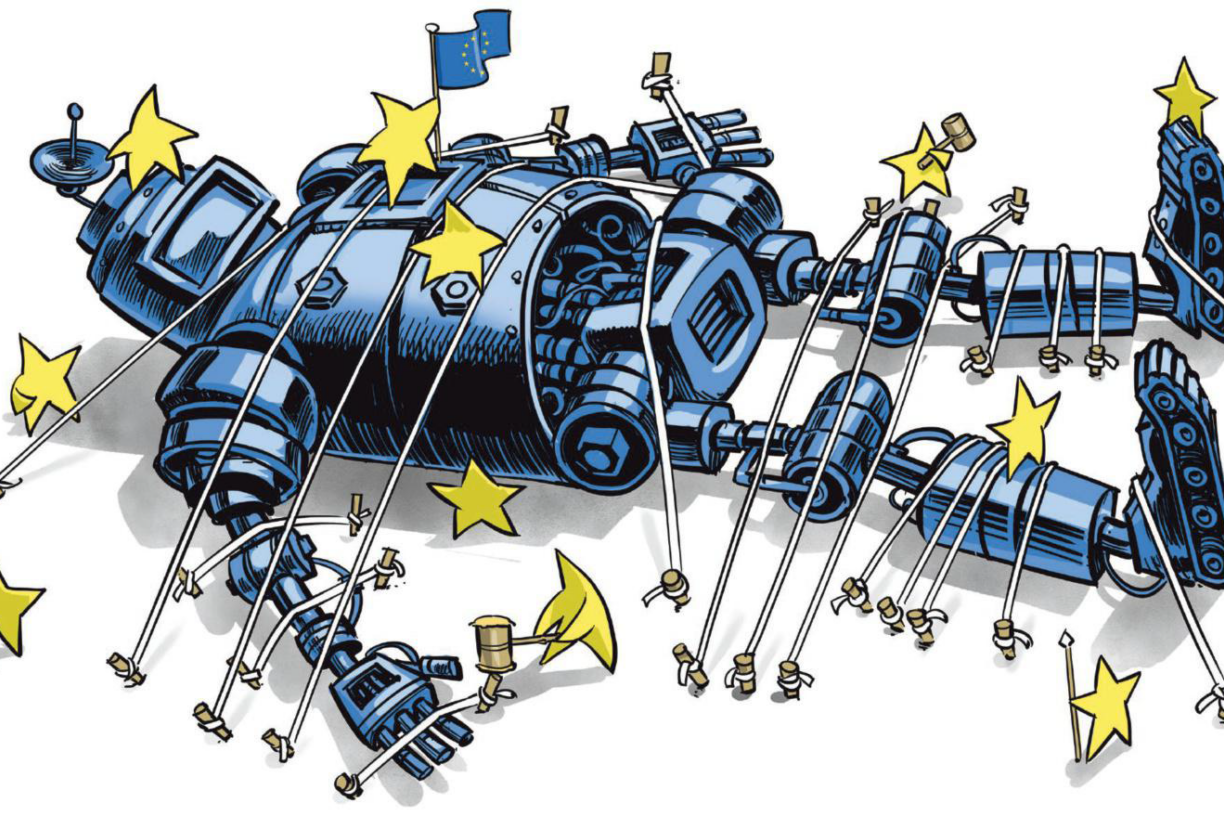
Een wildgroei aan ongereguleerde AI- toepassingen
De Europese AI-wet stelt teleur, schrijven José van Dijck, Natali Helberger en Corien Prins, want...

By José van Dijck • December 07, 2023
Observe, inspect, modify: Three conditions for generative AI governance
In a world increasingly shaped by generative AI systems like ChatGPT, the absence of benchmarks...

By Corien Prins • November 30, 2023
How’s life? About the role of public values on well-being in an AI-dominated world
Keynote delivered by Prof. Corien Prins, Professor of Law and Informatization at Tilburg...

By Claes de Vreese • November 28, 2023
A wave of generative AI disinformation?
The broad roll out of generative AI tools poses new challenges for democracies: Generative AI...

By Roel Dobbe • November 23, 2023
‘Safety Washing’ at the AI Safety Summit
Earlier this month (November 1-2, 2023), tech companies and world leaders gathered at Bletchley...

By Corien Prins • November 21, 2023
Artificial Intelligence and the Judiciary
With developments such as ChatGPT and the upcoming AI Act of the European Union, the Judiciary...

By Linnet Taylor • Joan Lopez Solano • October 25, 2023
Why are sector transgressions so hard to govern? Reflections from Europe’s pandemic experience
In this commentary, the notion of ‘sector transgressions’ is addressed, which the...

By José van Dijck • October 05, 2023
AlgoSoc PI José van Dijck adviseert de overheid over regulering ChatGPT en andere generatieve AI
Overal ter wereld staan overheden voor de uitdagingen die kunstmatige intelligentie (AI)...

By Natali Helberger • Claes de Vreese • March 06, 2023
What kind of algorithmic society do we want to strive for?
Algorithmic decision-systems are increasingly central to our lives. In some situations they even...

By Natali Helberger • Claes de Vreese • April 20, 2023
Leveraging the potential of AI while promoting social and economic welfare for all
Algorithmic decision-systems are increasingly central to our lives. In some situations they even...

By José van Dijck • October 05, 2023
Foundation models and the privatization of public knowledge
To protect the integrity of knowledge production, the training procedures of foundation models...

By Roel Dobbe • June 19, 2023
'AI-industrie strooit zand in onze ogen'
De discussie over de gevaren van artificiële intelligentie (AI) wordt gekaapt door de...

By Claes de Vreese • May 15, 2023
AI and Political Communication
How will artificial intelligence (AI) impact the field of political communication? This seems to...
By José van Dijck • March 06, 2023
Idealisme van OpenAI lijkt niet meer dan een luchtballon
Nu de hype rondom ChatGPT en Dall-E luwt, wordt het tijd om licht te schijnen op het gedachtegoed...

By Corien Prins • May 18, 2021
Discriminerende algoritmes
Afgelopen maand toonden zowel de Europese Commissie als de Tweede Kamer zich streng in het...

By Corien Prins • April 20, 2023
AI vraagt om veel meer dan het indrukken van een pauzeknop
Doemscenario's over AI zijn veelal ongefundeerd, schrijft AlgoSoc co-PI Corien Prins samen met...
By Natali Helberger • April 20, 2023
ChatGPT and the AI Act
It is not easy being a tech regulator these days. The European institutions are working hard...
By José van Dijck • April 20, 2023
Masterclass ChatGPT
AlgoSoc PI José van Dijck, hoogleraar Media en Digitale Samenleving aan Universiteit Utrecht, gaf...

By José van Dijck • April 20, 2023
AI vraagt ook bestuurlijke intelligentie
Hoe zorgen we dat onze instituties de technologie weer kunnen bijbenen? Volgens José van Dijck...

By Natali Helberger • Claes de Vreese • April 20, 2023
The EU is going too far with political advertising!
The EU is set to complement the DSA with a new regulation on (targeted) political advertisements....

By Corien Prins • January 28, 2022
Rutte IV: toezichtreflex en Autoriteit Persoonsgegevens
Deze week is – met 28 januari als de Dag van de Privacy – een mooi moment om iets over de...

By Natali Helberger • April 19, 2023
On the draft European Media Freedom Act
In December last year, Twitter suspended without notification the accounts of several leading...

By Natali Helberger • April 20, 2023
The platform-media relationship in the European Media Freedom Act
The European Media Freedom Act (EMFA) proposal takes aim at very large online platforms’...

By Corien Prins • November 22, 2022
Van een verbod op TikTok naar de noodzakelijke cloudstrategie in het juridische domein
Onlangs bepleitte de ChristenUnie een verbod op de filmpjes-app TikTok. Aanleiding is het risico...

By José van Dijck • April 20, 2023
Hoe weet je of een kennisbron als ChatGPT deugt?
De werkwijze van AI-kennissystemen (zoals ChatGPT) moet transparant en controleerbaar zijn. Dit...

By Fabio Votta • August 23, 2022
Electoral and religious correlates of COVID-19 vaccination rates in Dutch municipalities
Beyond a public health issue, COVID-19 vaccination was also an issue of political and social...
