June 25, 2026
Learning Call: GenAI and the DSA’s Systemic Risk Framework

This Learning Call, part of an ongoing series on current issues surrounding the Digital Services Act (DSA), examines generative AI as a test case for the DSA’s systemic risk framework.
Click here to watch the full recording of the Learning Call, originally published on the DSA Observatory.
Speakers discuss the nature of GenAI‑related risks and the governance mechanisms provided by the DSA and related legal frameworks to address them. Such risks may arise from the dissemination of synthetic and manipulated media, like deepfakes, on very large online platforms and search engines (VLOPSEs), as well as from new GenAI tools deployed by those very platforms in their content moderation systems or via embedded features like AI Overviews.
Broadly, the session probes the potential and limits of the DSA’s platform‑centric, risk‑based approach to tackling the complex challenges posed by GenAI, and consider its interaction with other legal instruments (AI regulation, competition law, copyright). The session will also reflect on recent enforcement and policy developments, such as the potential VLOSE designation for services like ChatGPT, the Commission’s investigation into X’s deployment of Grok, the proposed Digital Omnibus on AI, and the review of the EU rules on copyright and AI.
Speakers
Sebastian Felix Schwemer is Professor of Law and Technology at BI Norwegian Business School and Associate Professor at the University of Copenhagen’s Centre for Information and Innovation Law (on leave), where he previously served as Director. He co-directs the Nordic Centre for Internet and Society and has advised national lawmakers and the European Commission on aspects related to his research. His work focuses on the intersection of (information) technology and law.
Buse Raziye Çetin is Head of AI Policy at AI Forensics, a European non-profit investigating algorithmic systems and platform power, and a lecturer in EU AI Policy at ELISAVA School of Engineering & Design. Her work focuses on AI governance, platform regulation, and the societal impacts of large-scale algorithmic systems, with particular attention to the EU AI Act, the Digital Services Act, and accountability mechanisms.
John Albert is an Associate Researcher at the Institute for Information Law (IViR) at the University of Amsterdam, and a contributing writer and editor for the DSA Observatory. His current research examines how platforms frame generative AI in their systemic risk assessment reports; he has previously written on the functioning of DSA audits and researcher access to platform data within the DSA’s systemic risk-management regime.
João Pedro Quintais (moderator) is Associate Professor at Institute for Information Law (IViR), Amsterdam Law School, University of Amsterdam. João is member of AlgoSoc and the DSA Observatory and his current research includes an NWO Vidi grant (SSH) for the project “Generative AI Content Moderation: Regulation for Fundamental Rights” (2026-2031). Bio and publications available at https://www.ivir.nl/profile/quintais/
About the Learning Call Series
This series brings together researchers and practitioners to discuss current developments and emerging questions related to the Digital Services Act and its implementation. It is organised by the Alexander von Humboldt Institute for Internet and Society in collaboration with the Leibniz Institute for Media Research | Hans-Bredow-Institut (HBI), and the DSA Observatory, with support from the Network of Centres (NoC), and as part of the DSA Research Network, funded by Stiftung Mercator.
This learning call on Generative AI and the DSA’s Systemic Risk Framework is also supported through a NWO Vidi research grant awarded to Dr. João Pedro Quintais (IViR, University of Amsterdam) (Grant ID: https://doi.org/10.61686/HTKXT49425).
Author
See also
Content moderation and platform observability in the Digital Services Act
By Charis Papaevangelou • Fabio Votta • May 29, 2024
Will Europe Sacrifice the Digital Services Act in Negotiations with Trump?
By Claes de Vreese • March 26, 2025

Generative AI, copyright and the AI Act
By João Pedro Quintais • January 31, 2025
Observe, inspect, modify: Three conditions for generative AI governance
By José van Dijck • December 07, 2023
More results /
 The 2026 Stevin Prize: Claes de Vreese and his academic journey
By Claes de Vreese • October 07, 2026
By Ernesto de León • Claes de Vreese • September 17, 2026
By Natali Helberger • June 16, 2026
 Onderzoekers waarschuwen: AI-gebruik kan ‘rechterlijke blik’ vertroebelen
By Iris van Domselaar • Isabella Banks • October 01, 2026
By Iris van Domselaar • Isabella Banks • September 23, 2026
By Tynke Schepers • July 09, 2026
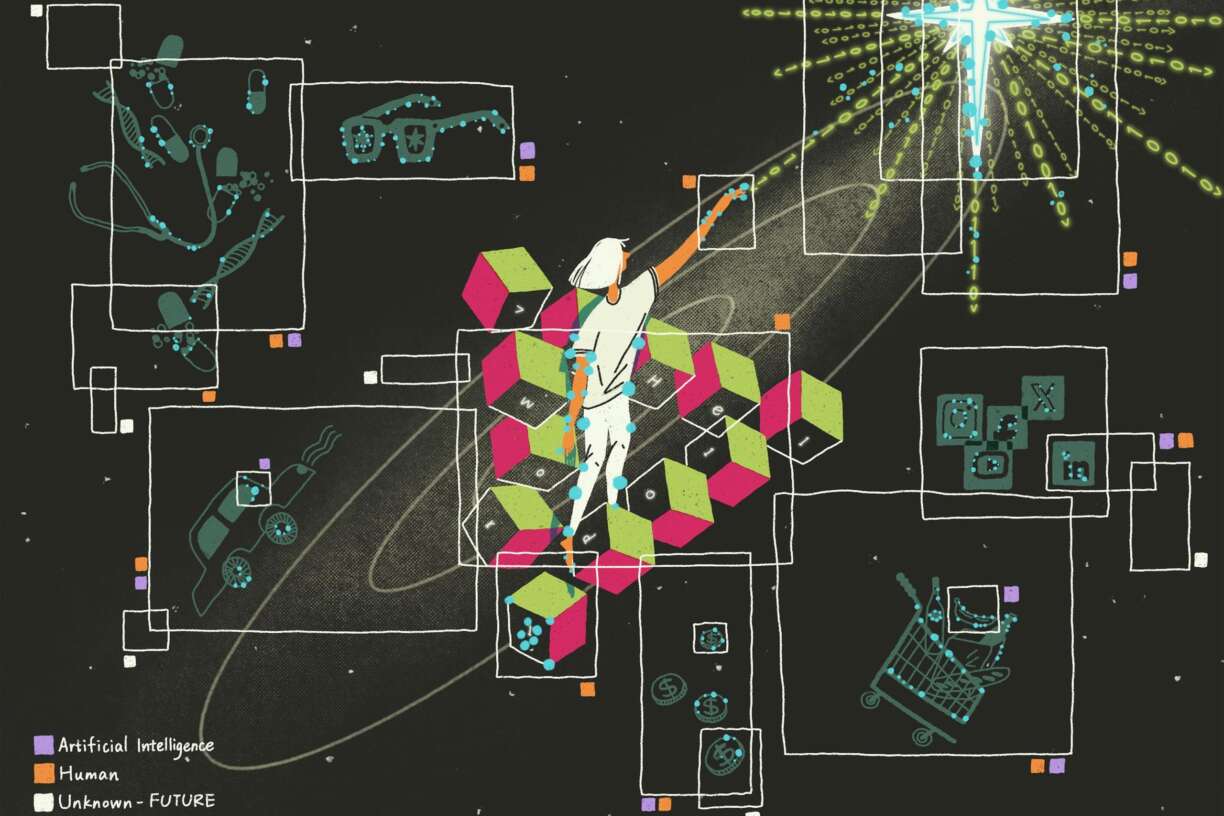 Fairy Tales That Make Life Harder: AI, and the social and ethical costs of believing in it
By Martijn Logtenberg • September 28, 2026
By Martijn Logtenberg • March 13, 2026
By Martijn Logtenberg • November 20, 2025
 The Label Paradox: Can AI transparency create more distrust?
By Natali Helberger • September 21, 2026
By Jin Wan • Theo Araujo • Natali Helberger • Claes de Vreese • September 17, 2026
By João Pedro Quintais • September 03, 2026
