October 07, 2026
The 2026 Stevin Prize: Claes de Vreese and his academic journey
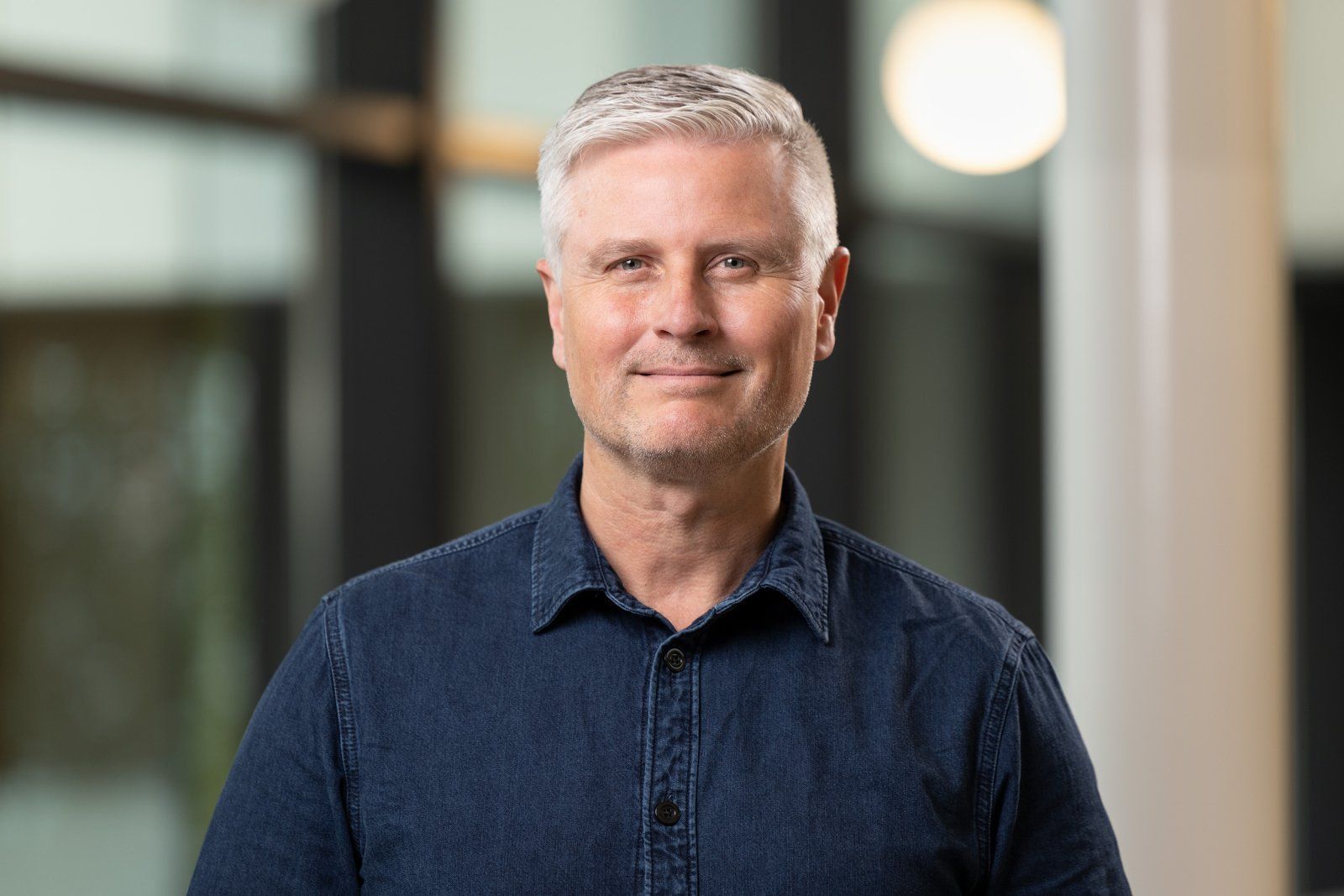
Our scientific co-director Claes de Vreese received the Stevin Prize, the highest recognition in the Dutch scientific community, and the award ceremony is taking place on October 7th with the Minister of Education and Science. To him, winning was a complete surprise. We sat down for a conversation about how it all came to be and, through the perspective of AlgoSoc and the AI, Media and Democracy Lab, how he envisions societal impact through research.
Interview by Leona Vețeleanu
Claes Holger de Vreese first came to Amsterdam in 1996 as an exchange student during his bachelor's degree of Film and Media studies from the University of Copenhagen, enjoying social life in the city like any of his peers would. However, his subsequent choice to stay at the UvA to continue his studies proved to be among the first steps on a path of high academic achievement and distinction. He completed a master's degree in European communication and went on to obtain his PhD cum laude under the supervision of Holli Semetko, a great communication and political science scholar with significant contributions to framing theory and political campaigning research.
At that time, after your bachelor's degree, what made you choose to focus on European and political communication, and on democracy? You had studied film, and your PhD thesis tackles television news – one can notice the transition.
Claes: "I had always been very interested in politics and journalism at the same time, so it came kind of naturally. In primary school, I was the editor of the school newspaper. I then developed more interest in the political realm; during my bachelor's degree, I was making a documentary, and I thought I was going to be a journalist, not a scholar. My academic route came rather late, actually, also with some serendipity. With the benefit of retrospective, it all looks like a pre-cooked plan, but I never had anything like that. Some of it was luck, and some of it was following interest spheres that were always there."
Just a year after his doctorate, Claes' work was already seeing wide recognition: in 2004 he was awarded the Nils Klim Prize for young scholars with “outstanding contributions to their field.” As he progressed within his academic career, he continued to reach beyond his (now distinguished) professorship with prolific publications, successfully receiving national and European research grants, presiding the International Communication Association and serving as editor of top journal Political Communication, among other things. His efforts show no signs of stopping as he maintains his focus on the most relevant democratic issues brought upon by the interplay of media and technology.
When the Dutch Research Council committee awarded Claes the 2026 Stevin Prize, they recognized the demonstrable societal impact of his body of research tackling how democracy is influenced by AI, the media and digital technologies. He achieved this impact not only through participation in public debate and policy advice but, perhaps more prominently, also through building collaborative research initiatives like the AI, Media & Democracy Lab and AlgoSoc, the national Gravitation Program on Public Values in the Algorithmic Society.
The Stevin prize committee praises your achievements in knowledge utilization – that is, applying research insights to practical situations, real-world problems and decision-making. When you look at the Lab and AlgoSoc, what does "impact" actually look like in practice? And how do you know when you've achieved it?
Claes: "Within the AI, Media & Democracy Lab, there is a great focus on establishing partnerships with other organizations in industry, governance, and civil society; we've worked with DPG Media, the Dutch Ministry of Interior and Kingdom Relations (BZK), and the disinformation hub BENEDMO among others. Of course, working within the ELSA framework also leads us to pay special attention to the practical aspects of how our research interacts with the world.
At AlgoSoc, at the core of the program lies the multi-domain scope (justice, health, media) that also combines disciplines to produce work that is practically relevant. We are also able to make long-term plans within the 10-year duration of the project, which means our key impact pathway is training a new generation of researchers.
But in terms of actually identifying impact, I see it when stakeholders actually implement our results, when practices and work flow together, when collaborators come back to know more, when networks are maintained and expanded, or when research gets picked up in politics."
You've described the Stevin Prize as an encouragement for the teams you're part of rather than a personal honor, and also that winning an award on your own feels "a bit strange". How do you actually structure co-directing, co-authoring research and shared credit in these broad and interdisciplinary initiatives?
Claes: "Research is a team process with so many contributions: from idea, to funding, to development, to lab infrastructure and support, to working with stakeholders, to doing the studies, analysing data, actual (re)writing, to communicating about the research. All of these are part of the research process, and equally important. We keep things organized, have peoples’ strengths foregrounded, work as team, be inclusive about authorship, and transparent from beginning.
AlgoSoc and the Lab come from the unique collaboration I've had with Natali Helberger for exactly a decade now that has hugely impacted both of our research paths. It has been extraordinary because we share many principles about research, like the need for collaborative and interdisciplinary work; we're both open to genuinely learn from each others’ fields."
Is there ever friction in bringing together different disciplines?
Claes: "Yes, but the friction is important. As some domains have different publication cultures and place importance on different things, both learning and misunderstandings happen."
Both AlgoSoc and the AI, Media and Democracy Lab were founded right before the big generative AI "moment" started at the end of 2022 and went on to become the massive technological advancement of this decade. How do you find your initial vision or intention for the projects has had to adapt to this?
Claes: "On one hand, it forced a complete pivot, but on the other hand we still had to deal with the same dynamics. Leading up to 2022, there was already a stronger focus on tech: I became a professor of AI and Society in 2021, when the UvA was already establishing chairs with this special emphasis. There was a general feeling that something was going to happen, it was sort of in the air. And for these projects, we began writing proposals years ahead of time – and we were still talking a lot about algorithms and automated decision-making for example, so there was a huge pivot needed towards AI. But in principle, the underlying questions that direct our work stayed the same: how do we protect and realize public values, how do we support the democratic function of media in a society changed by technological progress, and how do we keep this evolution under control through regulation? Only that these points received more urgency as things grew.
Even though we might have seen it coming, none of us thought AI would become something so big and so widely adopted. It had an uptake much faster than even social media. It’s possibly the fastest uptake of tech we’ve ever seen."
Reflecting on career paths, awards, collaborations and past approaches for establishing research programs shows what can be learned from an academic journey such as that of Claes. Receiving the Stevin prize now also puts him in a position able to continue determining future research directions that will yield the most impact, creating new opportunities and initiatives, all the while sharing the knowledge he has accrued until now with junior researchers.
Is there any area of work that you felt you couldn't address before, but that the €1.5 million prize now makes possible?
Claes: "It offers a unique chance to further develop the AI and democracy agenda in a time where developments are fast. Investment is needed for both the core support systems and for researchers, but also for a number of impact activities in the next years that I look forward to sharing more information about soon."
You've supervised over 90 PhD candidates and postdocs. If the next generation of researchers takes one thing from your approach to knowledge utilization for societal impact, what should it be?
Claes: "Look, supervision is really a reciprocal process, I learn an incredible amount too. In fact, doctoral supervision is what I consider the most important impact of any kind: a lasting contribution to knowledge and new talent. But, one message I hope to share is that no one is sitting and waiting for our knowledge. We have to be proactive, share knowledge openly, and understand what might be of interest and of relevance to the community we share with. It's about having humility in understanding stakeholder needs, as well as the ability to tailor your results to different contexts."
We congratulate Claes for his achievement and are immensely proud to be working alongside him. Creating tangible impact through a closer connection between the "ivory tower" of academia and pressing societal problems is increasingly a top priority.
Stay tuned for the 7 October ceremony, where the exact plans for the prize money will be shared as the award is officially given to the winners!
Author
Media / Sector Leader
Prof. dr. Claes de Vreese
Distinguished university professor of artificial intelligence and society with a special focus on media and democracy / University of Amsterdam
University ProfileSee also

Navigating the rapid technological evolution is one of the key challenges for AlgoSoc
By Dhavan Shah • February 19, 2024
The future of public values in the algorithmic society
July 09, 2025


AlgoSoc kiest voor alternatieve cloud
By José van Dijck • January 06, 2025
More results /
 The 2026 Stevin Prize: Claes de Vreese and his academic journey
By Claes de Vreese • October 07, 2026
By Ernesto de León • Claes de Vreese • September 17, 2026
By Natali Helberger • June 16, 2026
 Onderzoekers waarschuwen: AI-gebruik kan ‘rechterlijke blik’ vertroebelen
By Iris van Domselaar • Isabella Banks • October 01, 2026
By Iris van Domselaar • Isabella Banks • September 23, 2026
By Tynke Schepers • July 09, 2026
 Fairy Tales That Make Life Harder: AI, and the social and ethical costs of believing in it
By Martijn Logtenberg • September 28, 2026
By Martijn Logtenberg • March 13, 2026
By Martijn Logtenberg • November 20, 2025
 The Label Paradox: Can AI transparency create more distrust?
By Natali Helberger • September 21, 2026
By Jin Wan • Theo Araujo • Natali Helberger • Claes de Vreese • September 17, 2026
By João Pedro Quintais • September 03, 2026
