November 04, 2025
Will Annotators Disagree? Identifying Subjectivity in Value-Laden Arguments

This study argues that reducing multiple annotations to one “ground truth” can obscure meaningful disagreement in subjective tasks, such as identifying the human values behind arguments. It finds that models perform best when trained to detect subjectivity directly, helping flag arguments that different people may reasonably interpret in different ways.
Abstract
Aggregating multiple annotations into a single ground truth label may hide valuable insights into annotator disagreement, particularly in tasks where subjectivity plays a crucial role. In this work, we explore methods for identifying subjectivity in recognizing the human values that motivate arguments. We evaluate two main approaches: inferring subjectivity through value prediction vs. directly identifying subjectivity. Our experiments show that direct subjectivity identification significantly improves the model performance of flagging subjective arguments. Furthermore, combining contrastive loss with binary cross-entropy loss does not improve performance but reduces the dependency on per-label subjectivity. Our proposed methods can help identify arguments that individuals may interpret differently, fostering a more nuanced annotation process.
To continue reading please visit: https://doi.org/10.18653/v1/2025.findings-emnlp.824
This open access article was published in Findings of the Association for Computational Linguistics: EMNLP 2025 on 4 November 2025.
Homayounirad, A., Liscio, E., Wang, T., Jonker, C. M., & Siebert, L. C. (2025). Will Annotators Disagree? Identifying Subjectivity in Value-Laden Arguments. In Findings of the Association for Computational Linguistics: EMNLP 2025 (pp. 15237–15252). Association for Computational Linguistics. https://doi.org/10.18653/v1/2025.findings-emnlp.824
Keywords: Annotations, Subjectivity
Author



More results /
 The 2026 Stevin Prize: Claes de Vreese and his academic journey
By Claes de Vreese • October 07, 2026
By Ernesto de León • Claes de Vreese • September 17, 2026
By Natali Helberger • June 16, 2026
 Onderzoekers waarschuwen: AI-gebruik kan ‘rechterlijke blik’ vertroebelen
By Iris van Domselaar • Isabella Banks • October 01, 2026
By Iris van Domselaar • Isabella Banks • September 23, 2026
By Tynke Schepers • July 09, 2026
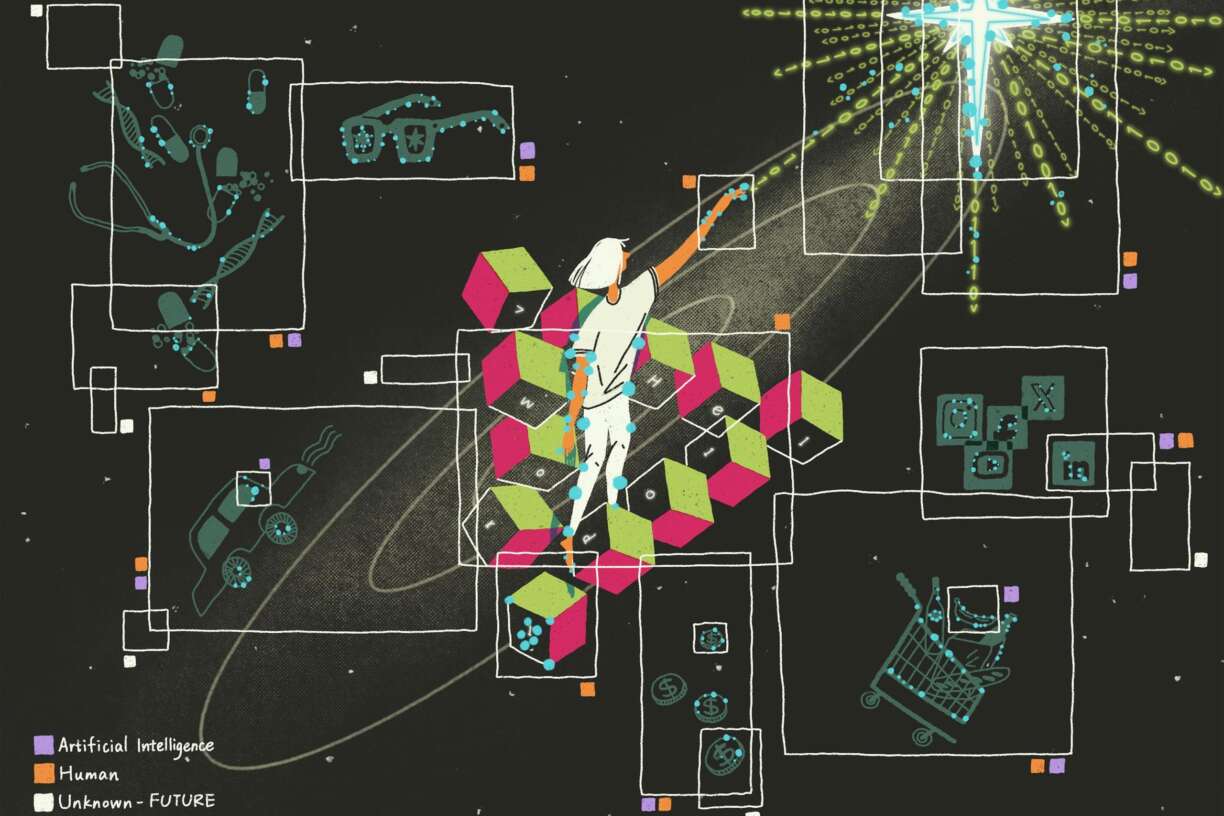 Fairy Tales That Make Life Harder: AI, and the social and ethical costs of believing in it
By Martijn Logtenberg • September 28, 2026
By Martijn Logtenberg • March 13, 2026
By Martijn Logtenberg • November 20, 2025
 The Label Paradox: Can AI transparency create more distrust?
By Natali Helberger • September 21, 2026
By Jin Wan • Theo Araujo • Natali Helberger • Claes de Vreese • September 17, 2026
By João Pedro Quintais • September 03, 2026
