March 15, 2024
Hyperpartisan, Alternative, and Conspiracy Media Users: An Anti-Establishment Portrait

This study examines hyperpartisan, alternative, and conspiracy media together as forms of anti-establishment information, using surveys and webtracking data from Germany and Switzerland during the first COVID-19 lockdowns. Exposure was concentrated among a small group of repeat visitors, who tended to distrust government, hold ideologically extreme views, and see COVID-19 as less dangerous than restrictions on individual freedom.
Abstract
While there is growing academic attention to readers of hyperpartisan, alternative, and conspiracy (HAC) media, our understanding of these sites has developed in separate bodies of work. We make a case for studying HAC media in unison, recognizing them as different information sources that share the same underlying anti-establishment sentiment. We do so by painting a detailed portrait of HAC media users, detailing 1) who consumes HAC media; 2) how they access it; and 3) how its consumption relates to public opinion. This is made possible by the unique combination of panel surveys taken before and after the first COVID-19 lockdowns in Germany and Switzerland, and webtracking data capturing participants’ actual online behavior. Our results show that those exposed to HAC media have a strong distrust of government and place themselves at the ideological extremes. While social media was a quintessential entry point for such media, most visits were registered by a small percentage of repeat visitors. Lastly, we show that those who consumed HAC media developed distinct opinions about the threat posed by COVID-19, mirroring the sentiments expressed in HAC media that the danger of the virus was exaggerated and that the real threat was to individual freedoms. With this case study, we showcase the theoretical utility of taking an integrated approach to HAC media, while providing nuanced insights into their audience.
To continue reading please visit: https://doi.org/10.1080/10584609.2024.2325426
This open access article was published in Political Communication on 15 March 2024.
de León, E., Makhortykh, M., & Adam, S. (2024). Hyperpartisan, Alternative, and Conspiracy Media Users: An Anti-Establishment Portrait. Political Communication, 41(6), 877–902. https://doi.org/10.1080/10584609.2024.2325426
Keywords: Hyperpartisan media; alternative media; conspiracy theories; COVID-19; webtracking; News Exposure; News Intermediaries
Author

See also
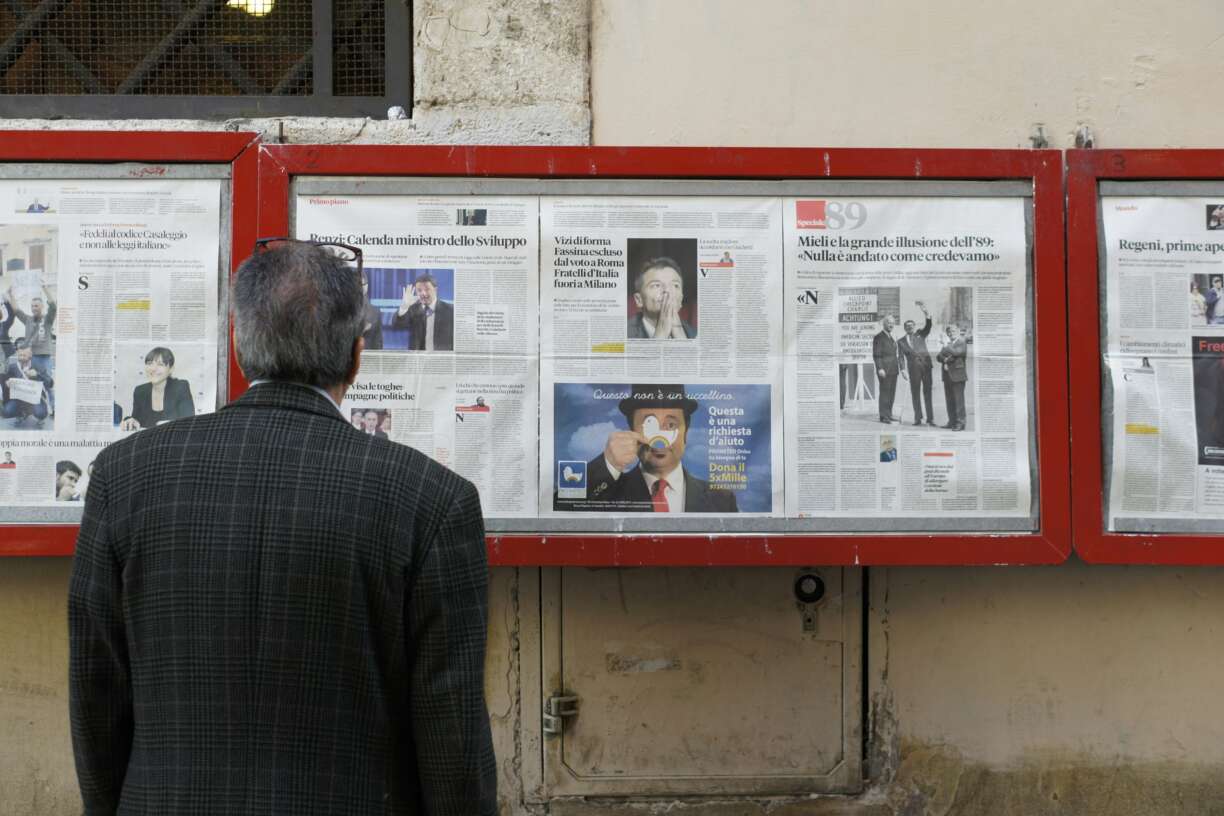
Hyperpartisan news
By Ernesto de León • December 28, 2025

Emerging generational fault lines in public opinion on Artificial Intelligence
By Ernesto de León • Fabio Votta • Theo Araujo • Claes de Vreese • May 17, 2024

Classifying TikToks Locally: Political Content Detection with Phi-4 on Android
By Ernesto de León • Fabio Votta • November 30, 2025
More results /
 The 2026 Stevin Prize: Claes de Vreese and his academic journey
By Claes de Vreese • October 07, 2026
By Ernesto de León • Claes de Vreese • September 17, 2026
By Natali Helberger • June 16, 2026
 Onderzoekers waarschuwen: AI-gebruik kan ‘rechterlijke blik’ vertroebelen
By Iris van Domselaar • Isabella Banks • October 01, 2026
By Iris van Domselaar • Isabella Banks • September 23, 2026
By Tynke Schepers • July 09, 2026
 Fairy Tales That Make Life Harder: AI, and the social and ethical costs of believing in it
By Martijn Logtenberg • September 28, 2026
By Martijn Logtenberg • March 13, 2026
By Martijn Logtenberg • November 20, 2025
 The Label Paradox: Can AI transparency create more distrust?
By Natali Helberger • September 21, 2026
By Jin Wan • Theo Araujo • Natali Helberger • Claes de Vreese • September 17, 2026
By João Pedro Quintais • September 03, 2026
