May 18, 2025
Tracing Knowledge Gaps: Investigating the Influence of Education on News Exposure and Knowledge Using Digital Trace Data

This study combines surveys and digital trace data from Switzerland and Germany to examine how education-related knowledge gaps emerged early in the context of the COVID-19 pandemic. Lower-educated participants consumed less general and COVID-related online news, producing gaps in some knowledge areas, but they learned at least as much from the COVID news they did encounter—suggesting news selection, rather than weaker processing, is the main driver of knowledge gaps.
Abstract
The knowledge gap hypothesis—the assumption that an increasing flow of news on a topic fosters a gap in knowledge between the more and the less educated—has been demonstrated in numerous studies throughout the past 60 years. Knowledge gaps are attributed to individual differences in media selection and information processing capacities. However, it has been difficult to investigate the relative influence of selection and processing with conventional research methods. We used an innovative combination of individual-level digital trace and survey data collected in Switzerland (n = 403) and Germany (n = 471) to study the widening of knowledge gaps throughout the communication process. The data were collected at the onset of the COVID-19 pandemic, an extraordinary period of extremely high information inflow on a novel topic. Our analyses show that individuals with lower education use less online news in general and less COVID-19-related news in particular than those with higher education, which results in a difference in knowledge about the origin of COVID-19 (but not on its severity). However, those with lower education do not have a similar share of COVID-19-related news in their news diet, and they learn even more than those with higher education from the COVID-19-related news that they are exposed to. Our study thus suggests that knowledge gaps are predominantly a result of selecting into news use.
To continue reading please visit: https://doi.org/10.1177/19401612251335372
This open access article was published in The International Journal of Press/Politics on 18 May 2025.
Wirz, D. S., de León, E., Adam, S., & Makhortykh, M. (2025). Tracing Knowledge Gaps: Investigating the Influence of Education on News Exposure and Knowledge Using Digital Trace Data. The International Journal of Press/Politics. https://doi.org/10.1177/19401612251335372
Keywords: knowledge gap, media use, COVID-19, education, digital trace data, web tracking, linkage analysis
Author

See also
Hyperpartisan, Alternative, and Conspiracy Media Users: An Anti-Establishment Portrait
By Ernesto de León • March 15, 2024
Personality and political news consumption online: A comparison between self-reports and webtracking data
By Ernesto de León • May 31, 2024
How do media contribute to the dissemination of conspiracy beliefs? A field study combining panel and web tracking at the outbreak of the COVID-19 pandemic
By Ernesto de León • July 18, 2025
More results /
 The 2026 Stevin Prize: Claes de Vreese and his academic journey
By Claes de Vreese • October 07, 2026
By Ernesto de León • Claes de Vreese • September 17, 2026
By Natali Helberger • June 16, 2026
 Onderzoekers waarschuwen: AI-gebruik kan ‘rechterlijke blik’ vertroebelen
By Iris van Domselaar • Isabella Banks • October 01, 2026
By Iris van Domselaar • Isabella Banks • September 23, 2026
By Tynke Schepers • July 09, 2026
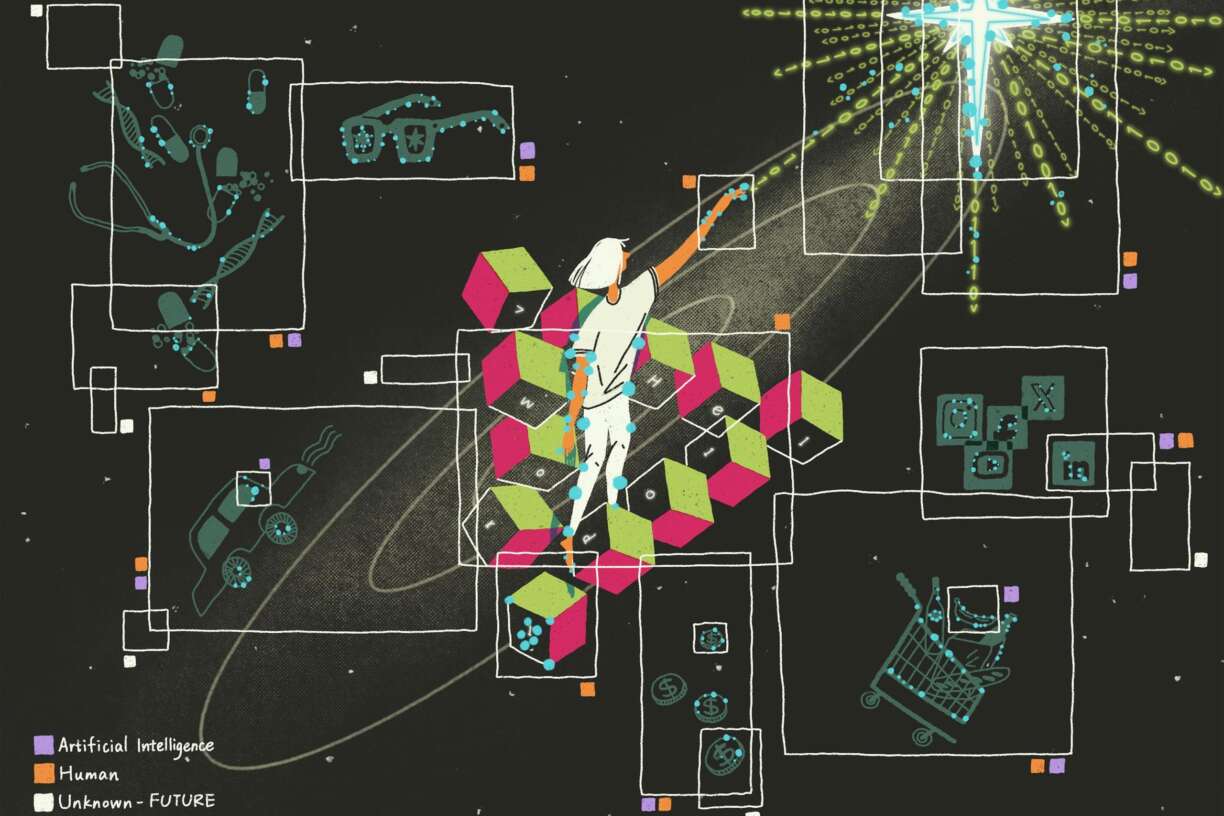 Fairy Tales That Make Life Harder: AI, and the social and ethical costs of believing in it
By Martijn Logtenberg • September 28, 2026
By Martijn Logtenberg • March 13, 2026
By Martijn Logtenberg • November 20, 2025
 The Label Paradox: Can AI transparency create more distrust?
By Natali Helberger • September 21, 2026
By Jin Wan • Theo Araujo • Natali Helberger • Claes de Vreese • September 17, 2026
By João Pedro Quintais • September 03, 2026
